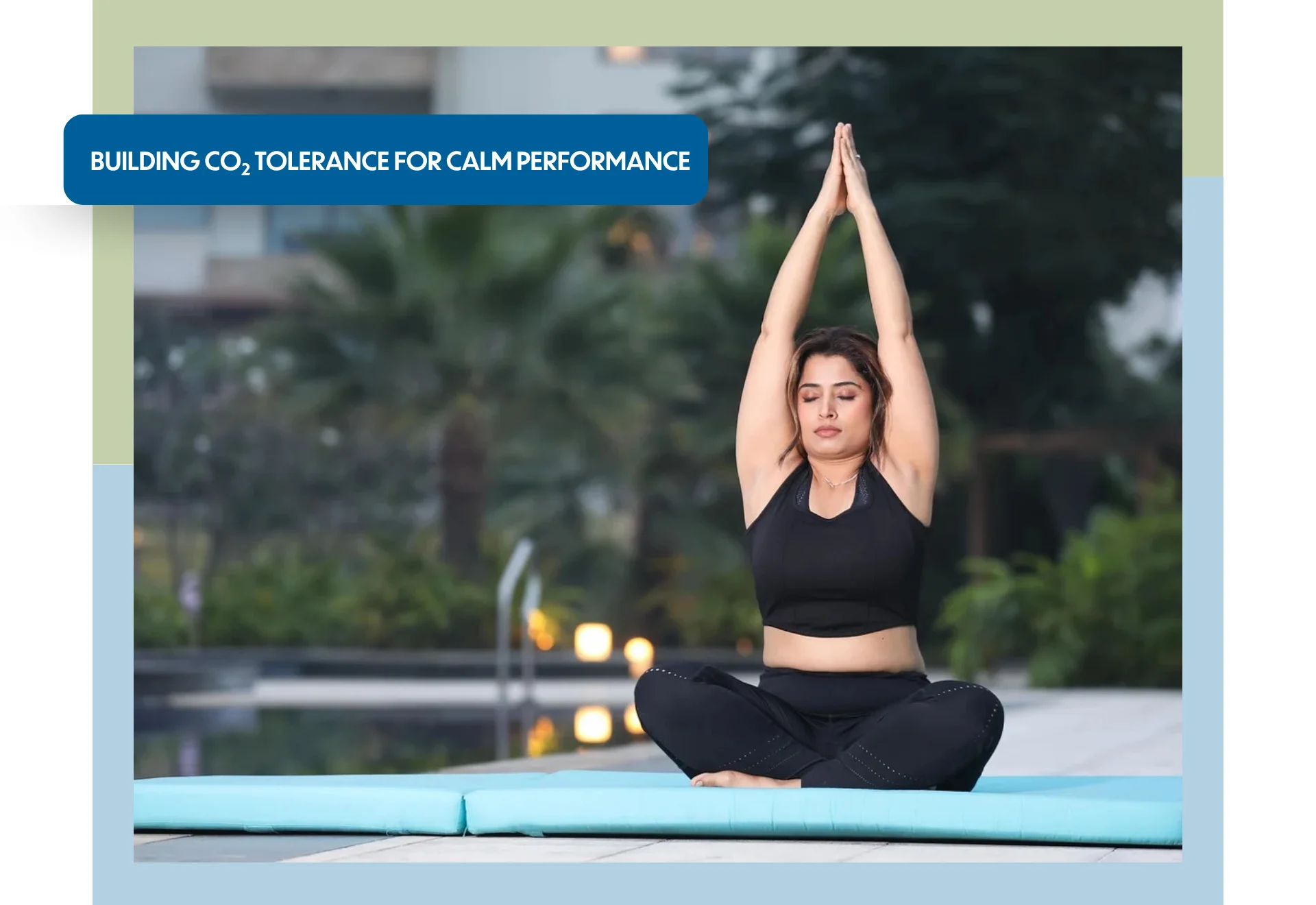
Most people think about fitness in terms of muscles, endurance, or skill. Rarely do we consider the role of carbon dioxide (CO₂), the very gas we are constantly trying to get rid of with each exhale. Yet, how well we can tolerate CO₂ directly shapes our ability to perform under pressure, both physically and mentally. From athletes in competition to executives in boardrooms, those who can stay composed when their breath shortens have a competitive edge. CO₂ tolerance isn’t just a breathing gimmick; it’s a foundation for nervous system balance, stress resilience, and sustainable performance.
The Science of CO₂ and Calm
When you inhale oxygen, it fuels your cells. But it’s carbon dioxide that determines how effectively that oxygen is delivered to your body. The
Bohr effect, a well-documented physiological principle, shows that higher levels of CO₂ actually help release oxygen from hemoglobin into your tissues. In other words, a higher tolerance to CO₂ ensures that your muscles, organs, and brain receive the oxygen they need when it matters most.
Conversely, a low CO₂ tolerance can trigger feelings of panic, breathlessness, and even dizziness, despite having plenty of oxygen in your bloodstream. This mismatch explains why people can hyperventilate during stressful moments or “gas out” quickly during endurance training. Improving your CO₂ tolerance is therefore less about “getting more oxygen” and more about teaching your body and mind to remain steady when carbon dioxide levels rise.
From Panic to Performance: How Breath Shapes Stress
Imagine stepping on a stage, entering a boxing ring, or lining up for a 10K race. Your heart races, your breathing quickens, and suddenly, it feels harder to catch your breath. This sensation isn’t a lack of oxygen; it’s your brain overreacting to the buildup of CO₂.
Stressful situations amplify this sensitivity. Individuals with a low CO₂ tolerance tend to breathe rapidly, lose control of their breathing rhythm, and activate their fight-or-flight response too early. In contrast, athletes and performers who have trained their CO₂ tolerance can remain calm, able to control their pacing and sustain output without spiraling into panic breathing. For them, breathing becomes more than survival; it’s a strategic tool.
Simple Assessments: Where Do You Stand?
You don’t need expensive lab equipment to get a sense of your CO₂ tolerance. One practical test is the
BOLT score (Body Oxygen Level Test), which was popularized by the Buteyko breathing method. Here’s how it works:
- Sit calmly and take one normal breath in and out.
- Pinch your nose and hold your breath after the exhale.
- Time how many seconds pass until you feel the first clear urge to breathe.
Most untrained individuals score around 15–20 seconds. A score closer to 30–40 seconds suggests better CO₂ tolerance and, consequently, better resilience under stress. While this is not a perfect medical test, this simple metric can serve as a guide for your practice and help you track improvements.
Training CO₂ Tolerance: Practical Methods
Building CO₂ tolerance doesn’t require hours of meditation or complex biohacks. It comes down to deliberate breathing practices and exposure.
Nasal Breathing During Exercise:
By keeping your mouth closed during steady-state runs or even daily walks, you gradually teach your body to work with higher CO₂ levels. The initial discomfort fades, and your performance endurance grows.Breath Holds:
After exhaling, hold your breath during light activity, such as walking. This controlled exposure strengthens your ability to remain calm under CO₂ stress and can mimic the demands of high-pressure environments.Slow, Controlled Breathing:
Practicing six breaths per minute (inhale for five seconds, exhale for five seconds) lowers your baseline sensitivity to CO₂ and improves heart rate variability, a key marker of nervous system resilience.High-Intensity Breath Control:
More advanced athletes can integrate breath-hold intervals into sprint training, which simulates the oxygen debt and CO₂ rise they’ll experience in competition. The goal isn’t to suffer through suffocation but to build familiarity. As with any training, consistency and gradual progression matter more than extremes.
Beyond Athletics: Everyday Calm
CO₂ tolerance isn’t just for athletes; it impacts anyone navigating stress. Public speakers, musicians, military personnel, and even parents juggling chaotic mornings can benefit from better breath control. A high tolerance helps you pause before reacting, think clearly under pressure, and avoid spiraling into anxiety.
Consider a workplace presentation. Instead of shallow, rapid breaths that fuel nerves, a trained professional can slow their exhale, allowing CO₂ to accumulate slightly. This signals safety to the brain, which in turn reduces your heart rate and quiets mental chatter. The physiology of breathing becomes a psychological tool, with the body teaching the mind that calm is possible even in chaos.
A Breath-Based Edge
In a world where performance often hinges on composure, CO₂ tolerance is a hidden lever. It bridges the gap between physiology and psychology, between panic and precision. Unlike expensive supplements or complex gadgets, this advantage is free and available through the breath you already take tens of thousands of times a day. Training CO₂ tolerance may not be glamorous, and it doesn’t deliver instant results. But for those willing to practice, it transforms not just endurance but presence. You don’t just breathe better, you perform better, think clearer, and live calmer.
Summary
This blog post explains the importance of CO₂ tolerance for both physical and mental performance. It details how CO₂ is crucial for oxygen delivery to the body’s tissues and how low tolerance can lead to feelings of panic and breathlessness, even when there’s plenty of oxygen available. The article offers a simple at-home test, the BOLT score, to assess CO₂ tolerance and provides practical training methods, including nasal breathing during exercise, controlled breath holds, and slow, intentional breathing. Ultimately, the post argues that improving CO₂ tolerance is a powerful, free tool for building resilience, staying calm under pressure, and enhancing performance in all areas of life, not just athletics.
Ready to start a new health challenge?
Join us for a fun, challenging workout that will help you practice staying calm under pressure! Join the InnerStrong team and make this Haunted Hustle your most empowering race yet!
[Register for Haunted Hustle Fun Run]
(https://raceroster.com/events/2025/104223/haunted-hustle-2025)
Want to learn more about a holistic approach to your wellness?
This Week we are celebrating Client Appreciation, we’re in the middle of it now! Look out for individual emails and messages for special resources and offers.