
Menopause Nutrition Coach for Sustainable Weight Loss
At Innerstrong Fitness, menopause nutrition coaching helps women navigate changes in body composition, energy, cravings, sleep, and recovery with a plan built around their individual needs. Rather than relying on a generic meal plan, a menopause nutrition coach considers your stage of life, health history, lifestyle, preferences, and goals to create practical strategies that fit into your everyday routine.
Nicole’s approach to nutrition coaching is informed by an Hons. BSc. in Biochemistry, specialized nutrition education through PN-1 and NCI, and her experience as a NASM-Certified Personal Trainer. This combination allows her to connect nutrition with exercise, body composition, lifestyle, and the physiological changes women experience during perimenopause and menopause.
This isn’t about extreme dieting, cutting out entire food groups, or chasing quick fixes. It’s about understanding what your body needs and creating a realistic nutrition strategy you can follow, and maintain, over time.

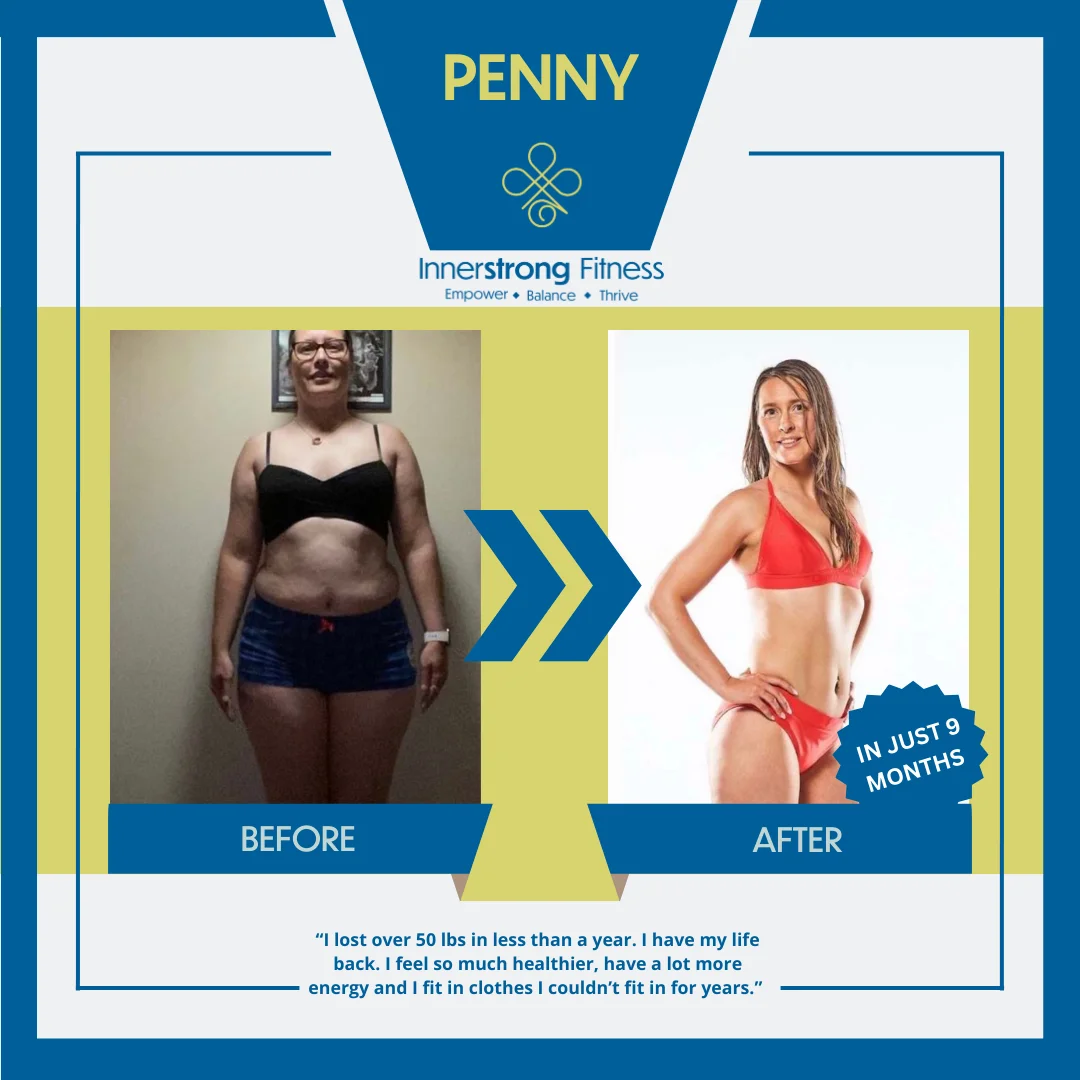
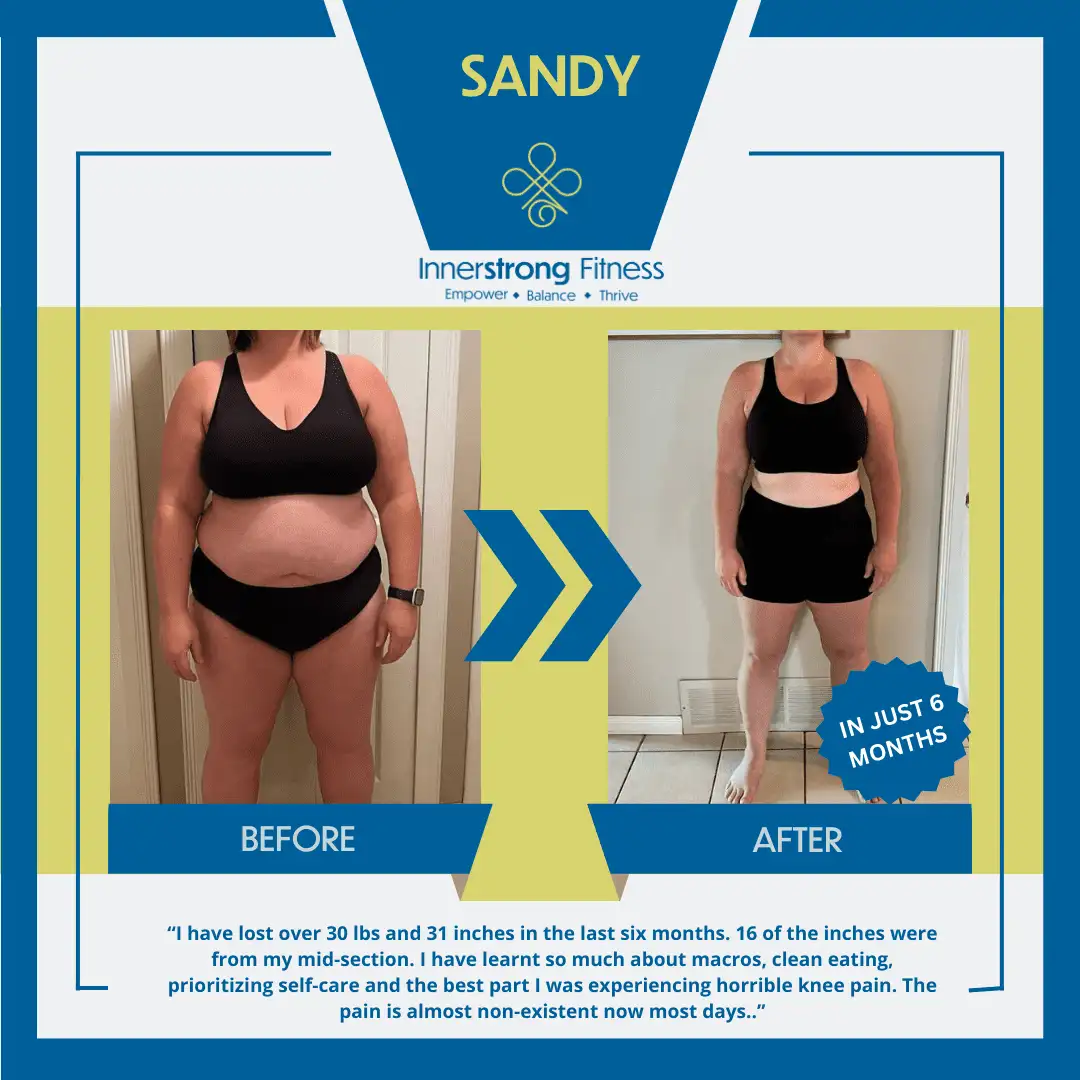
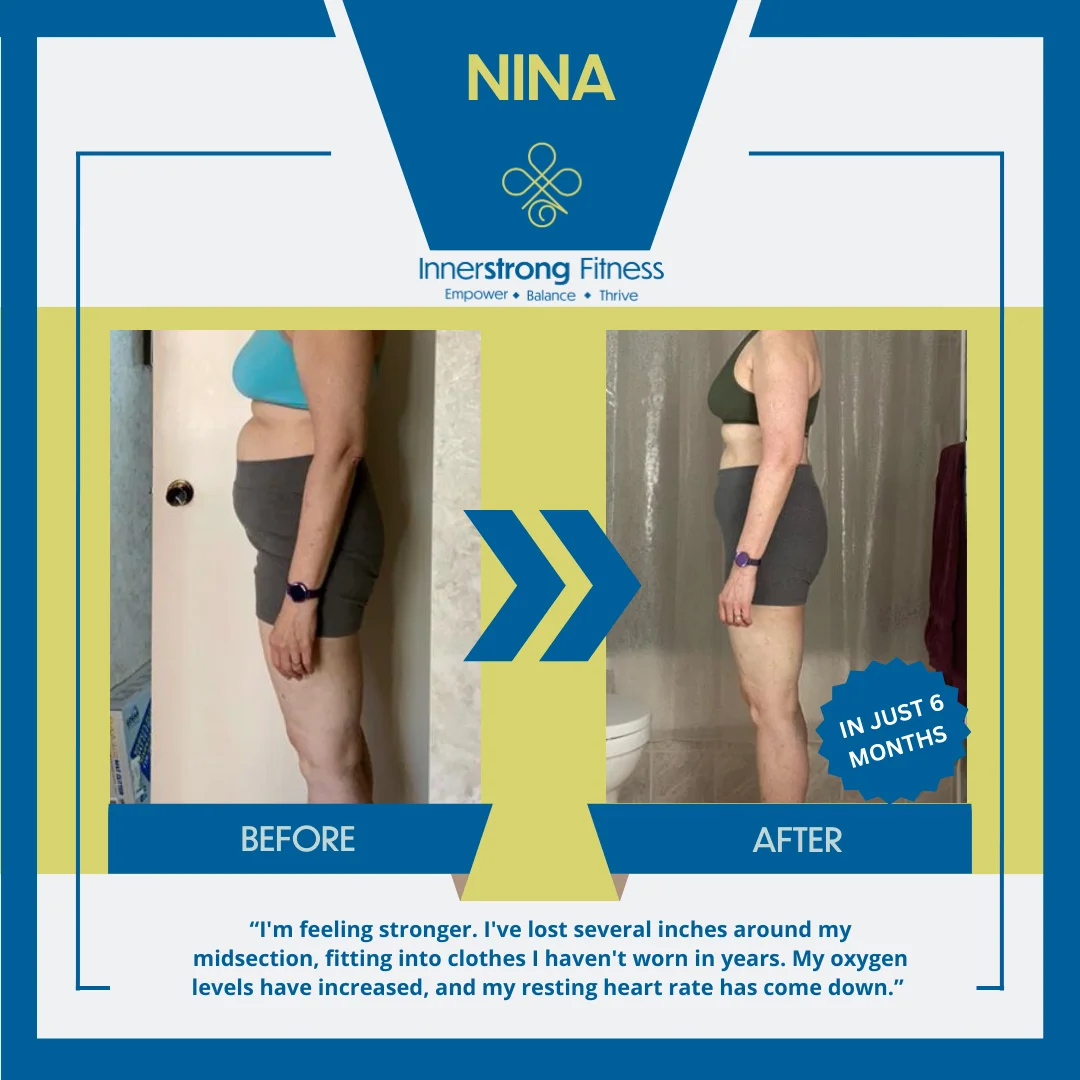
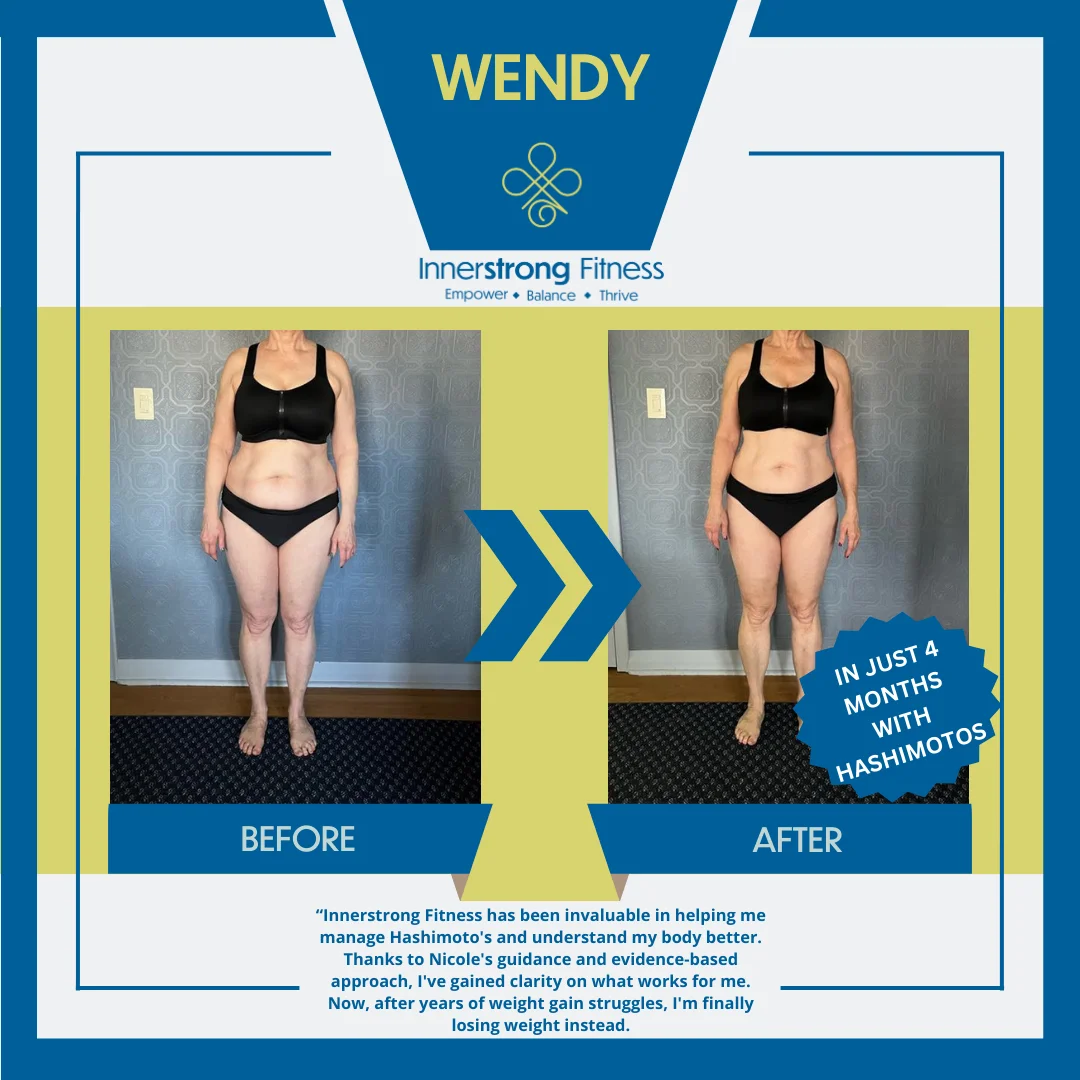
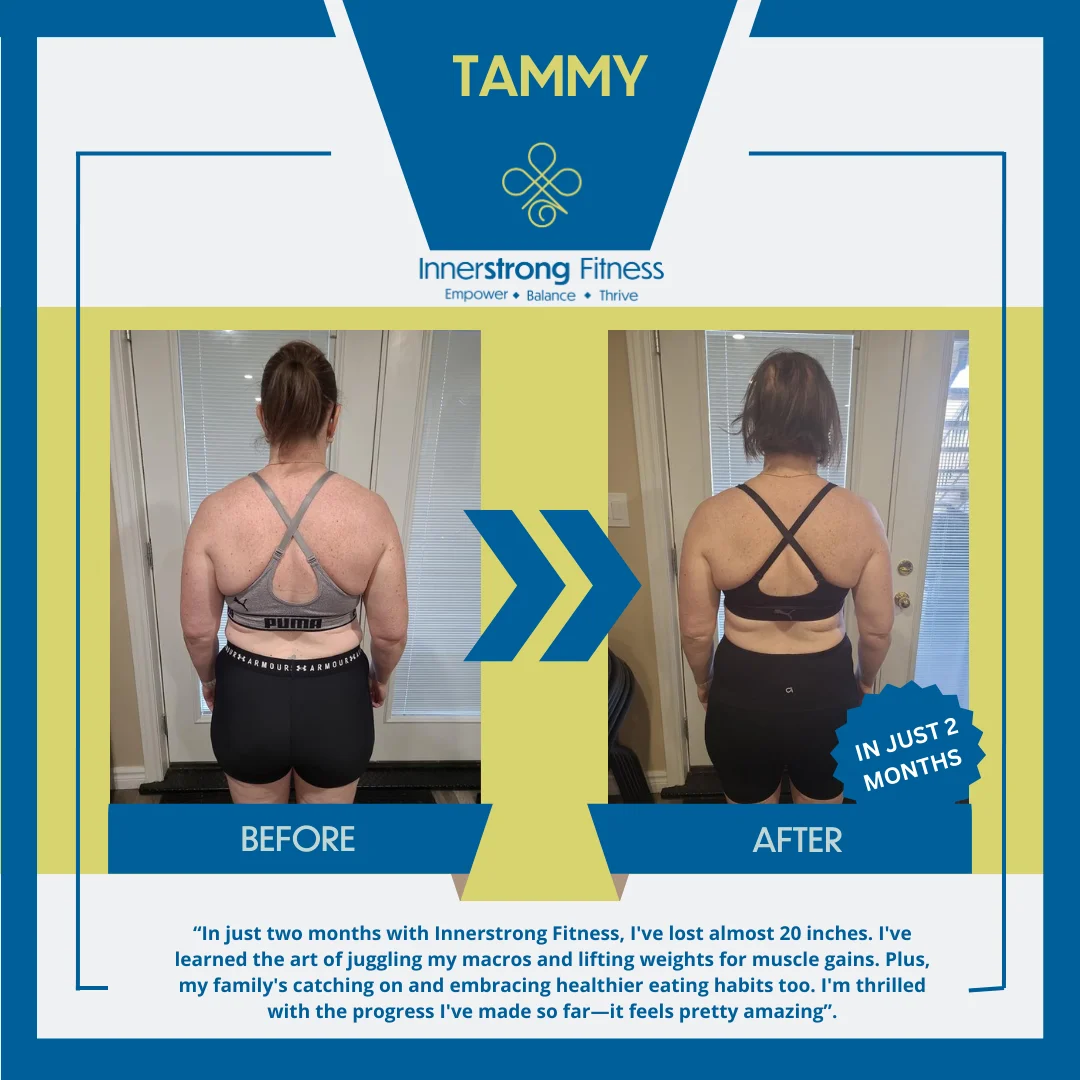
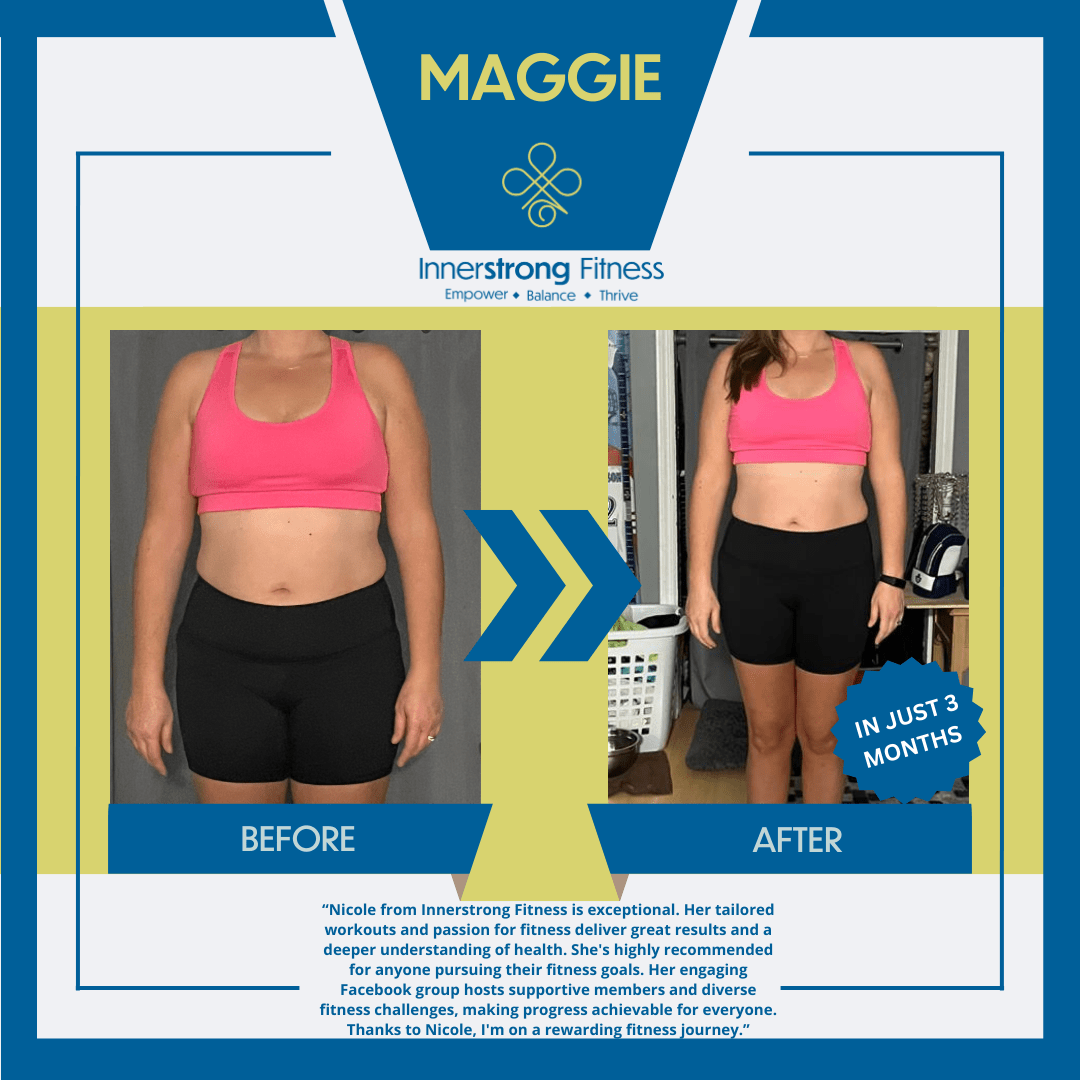
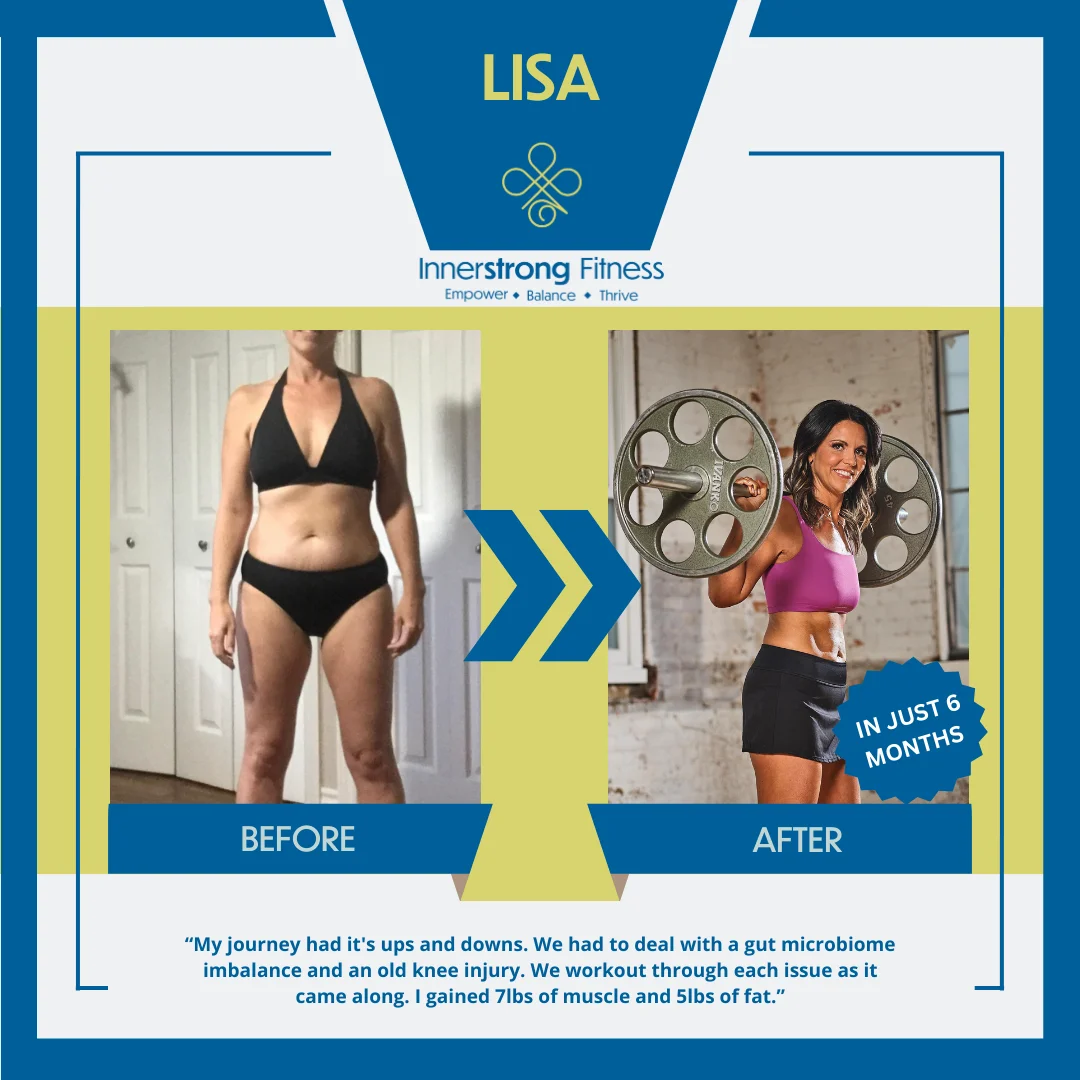
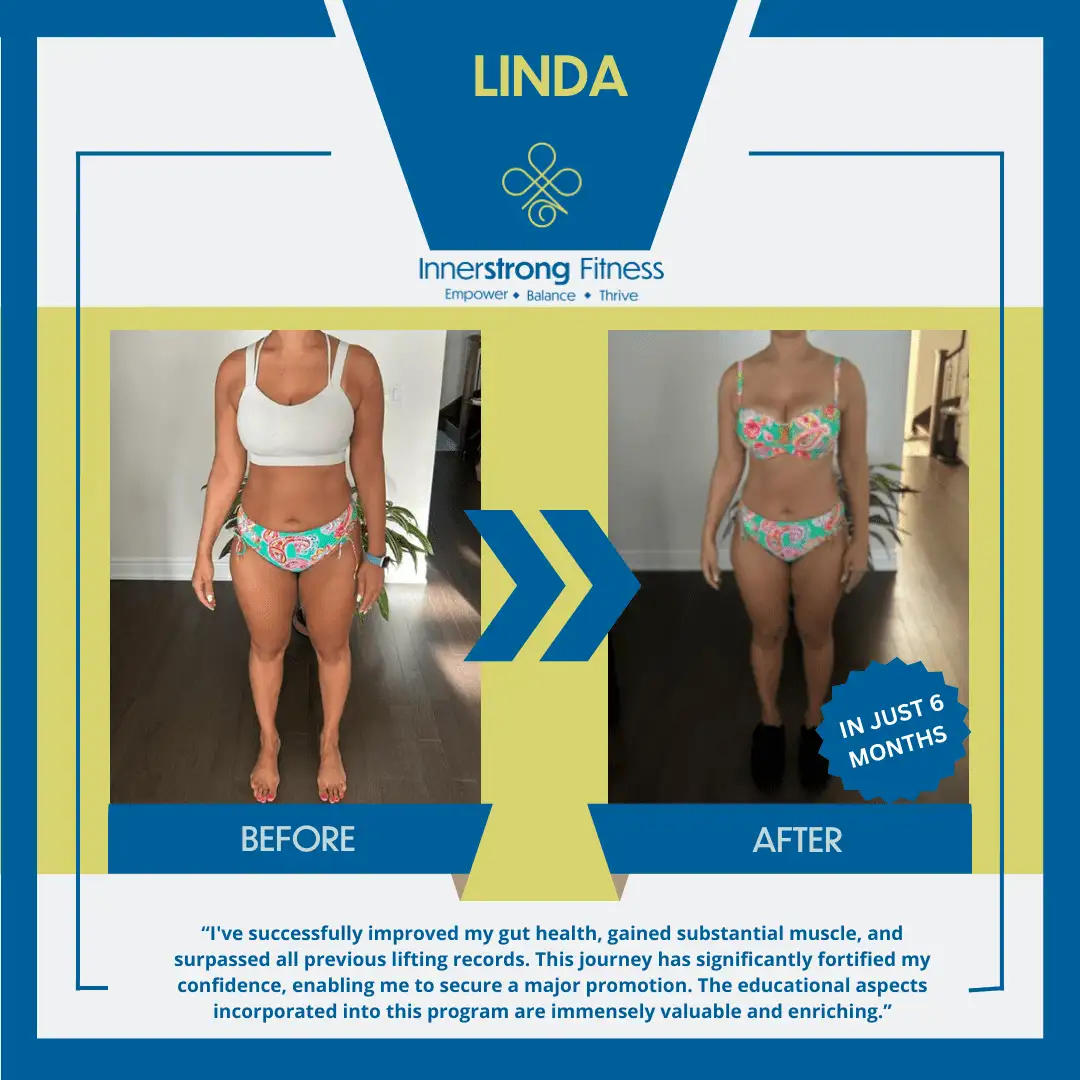
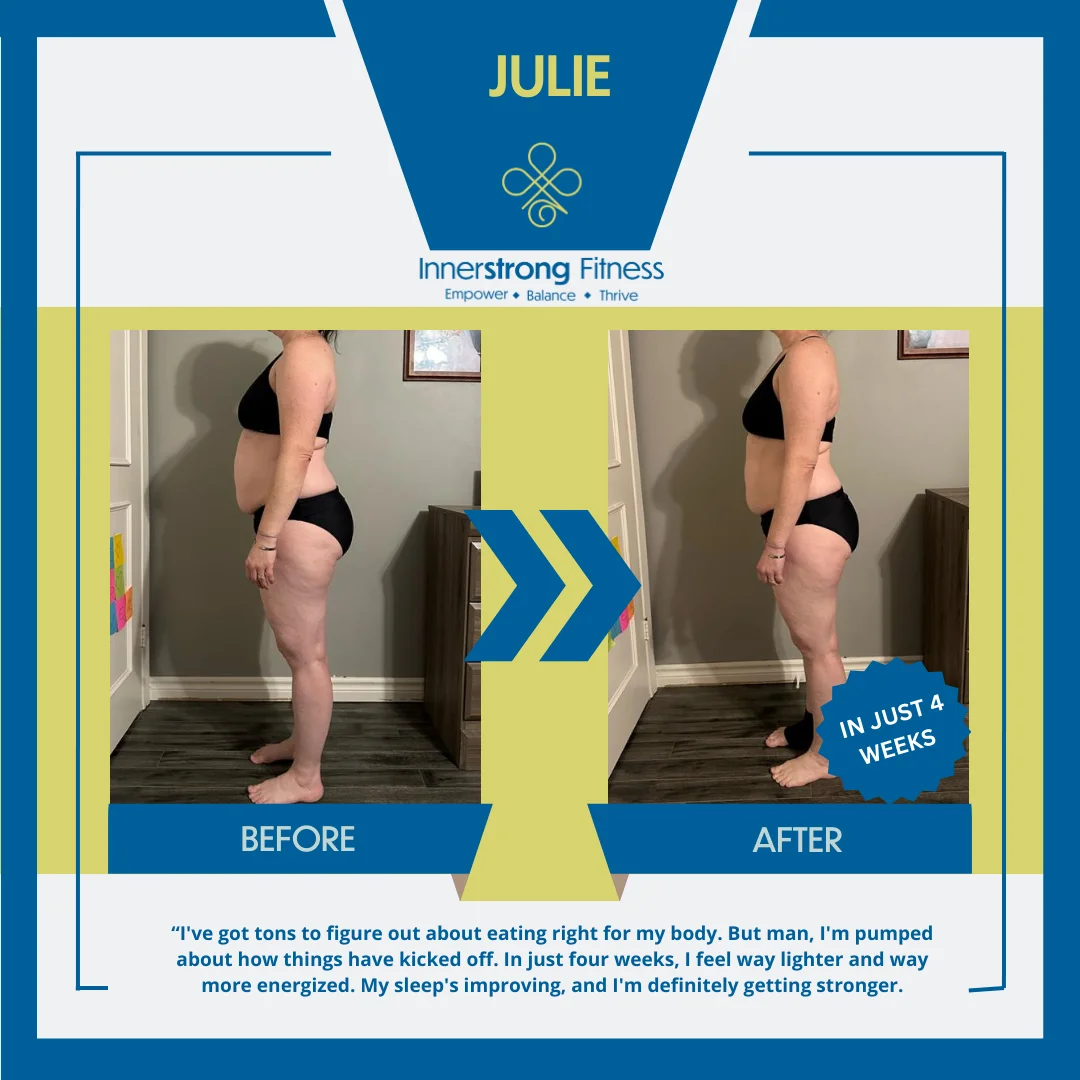
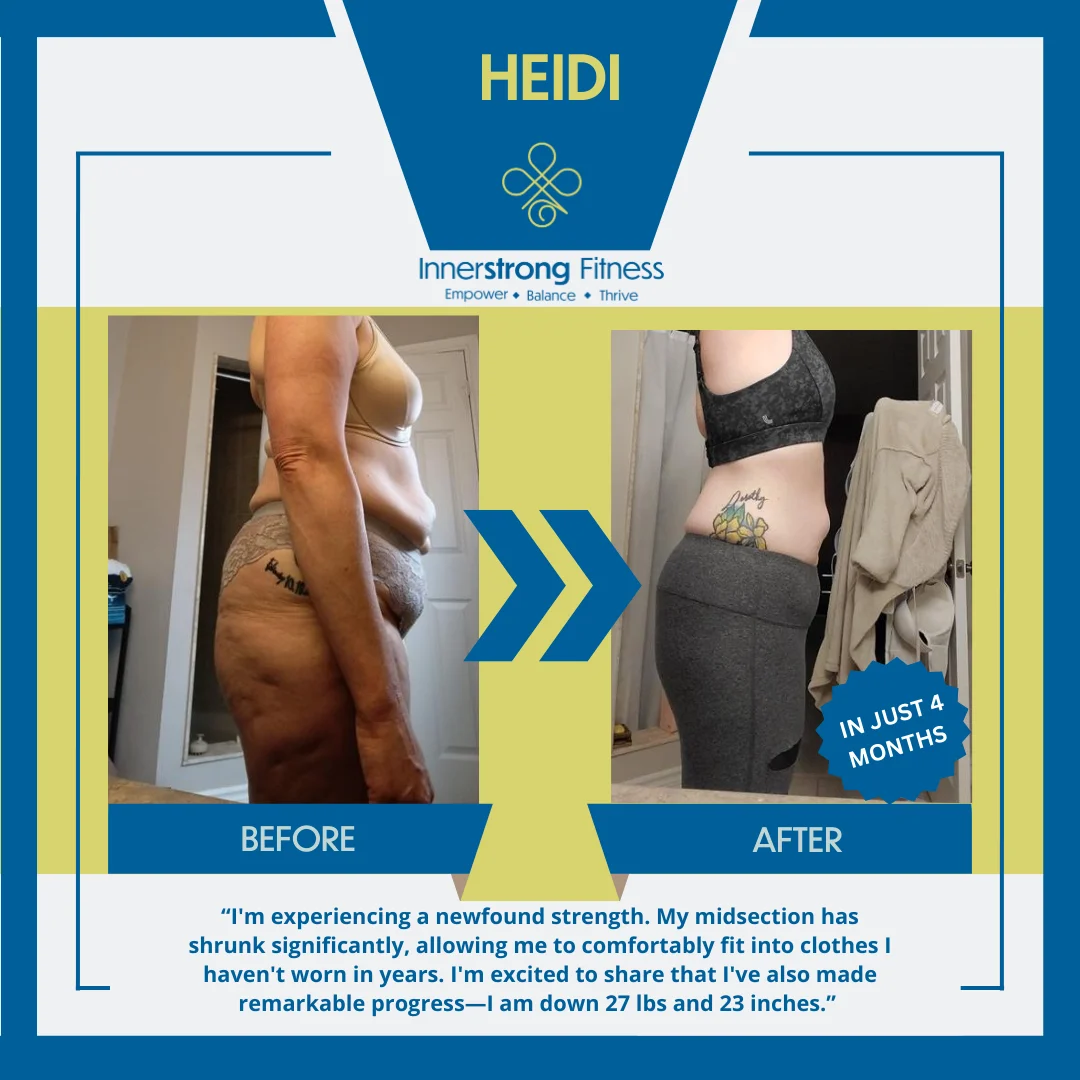
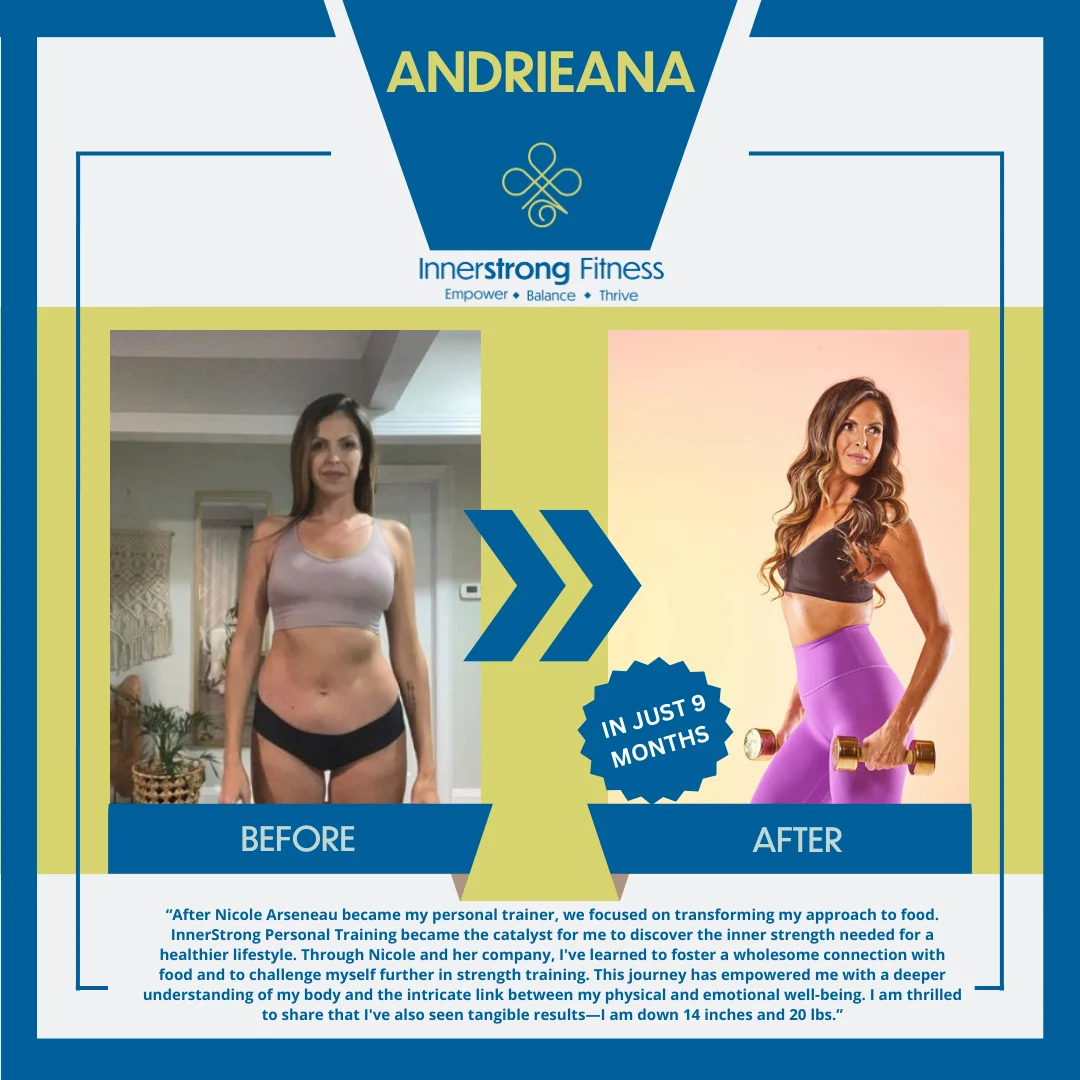
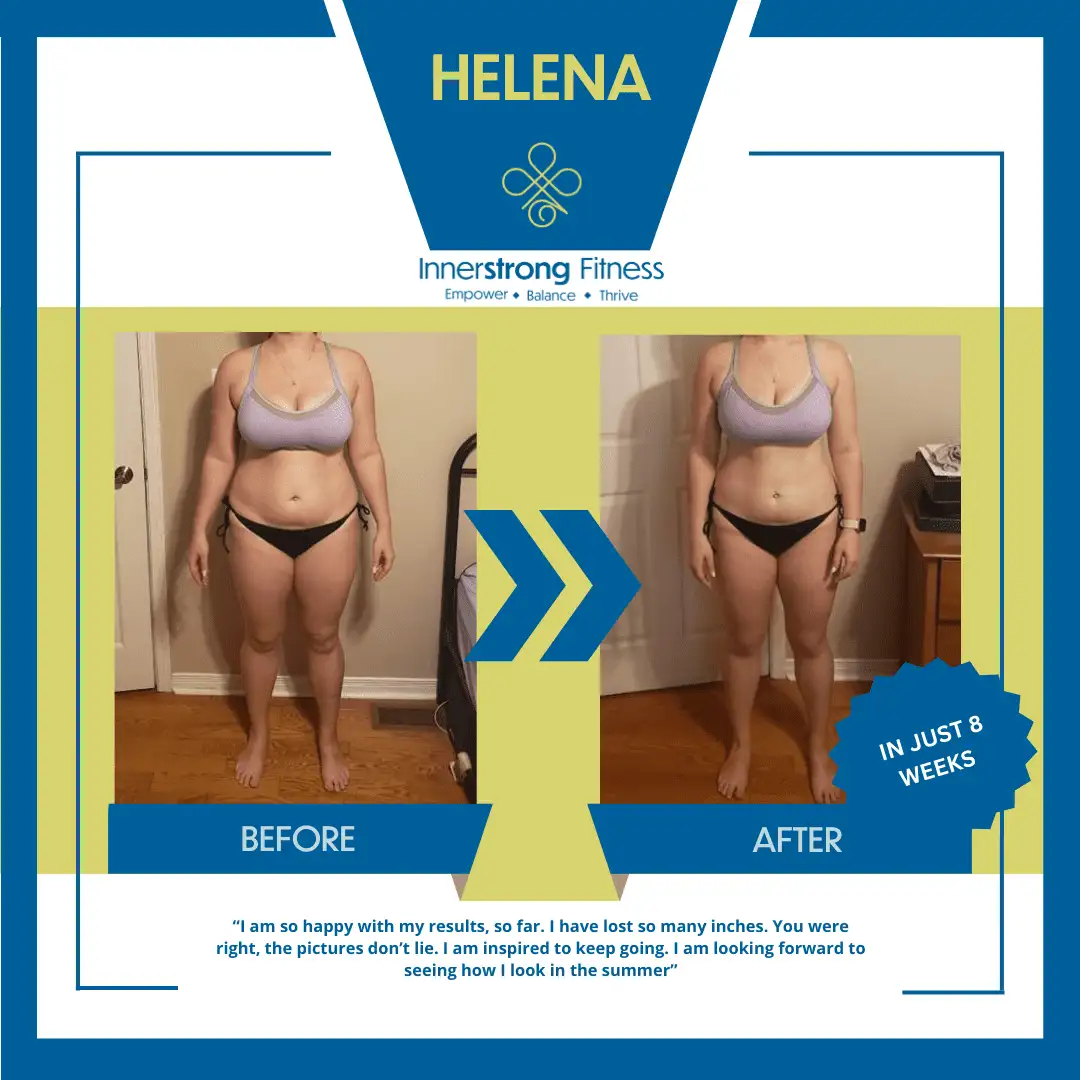
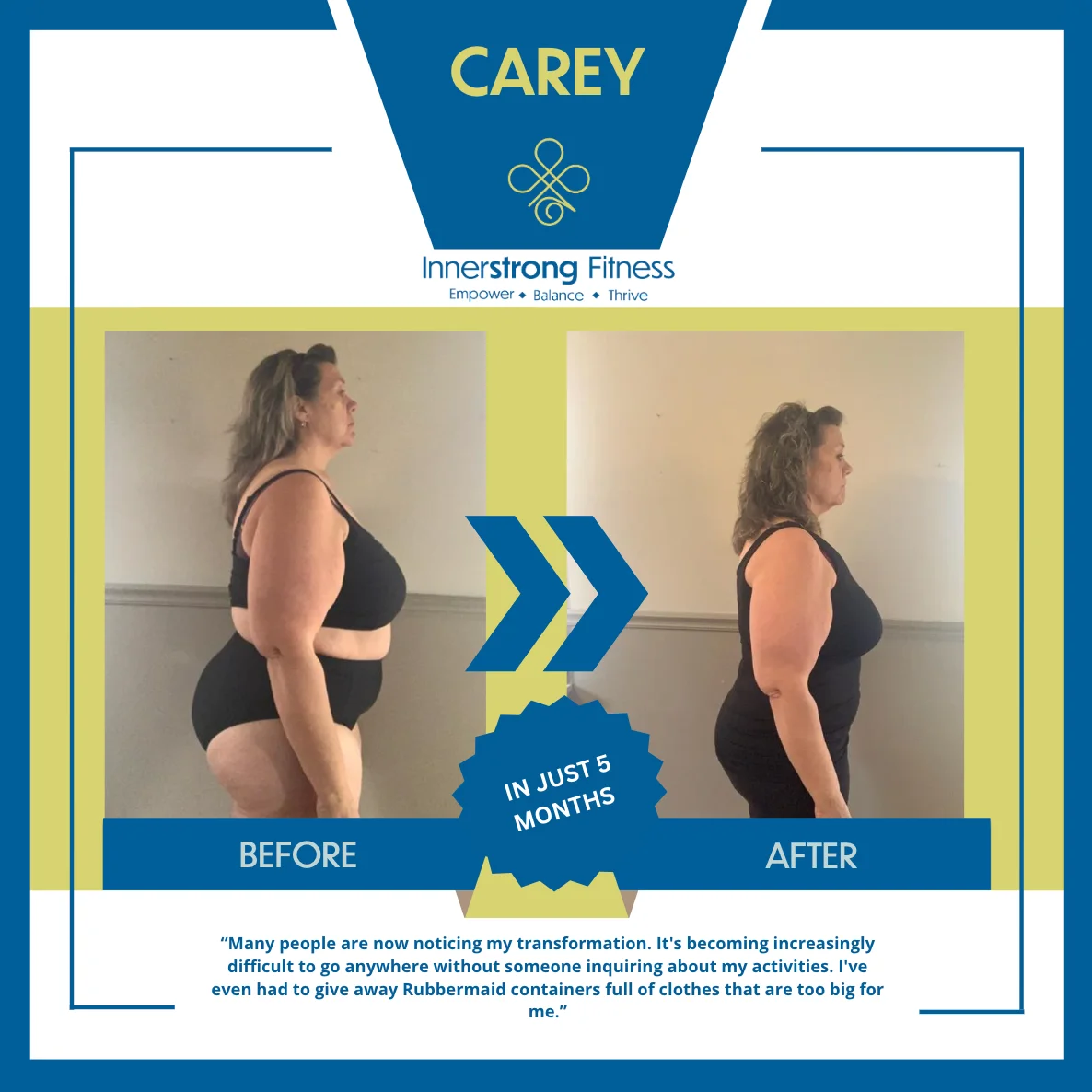
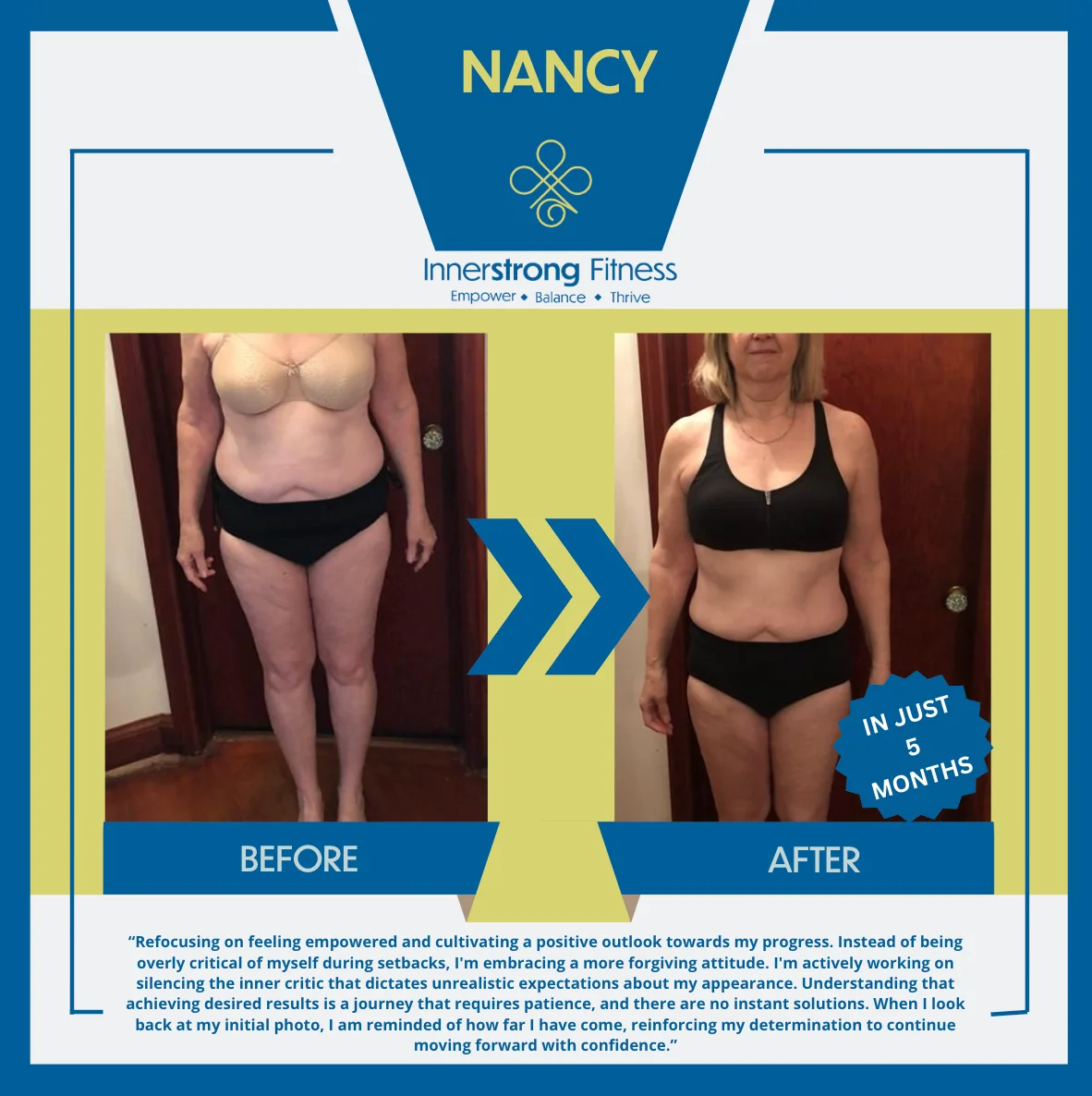
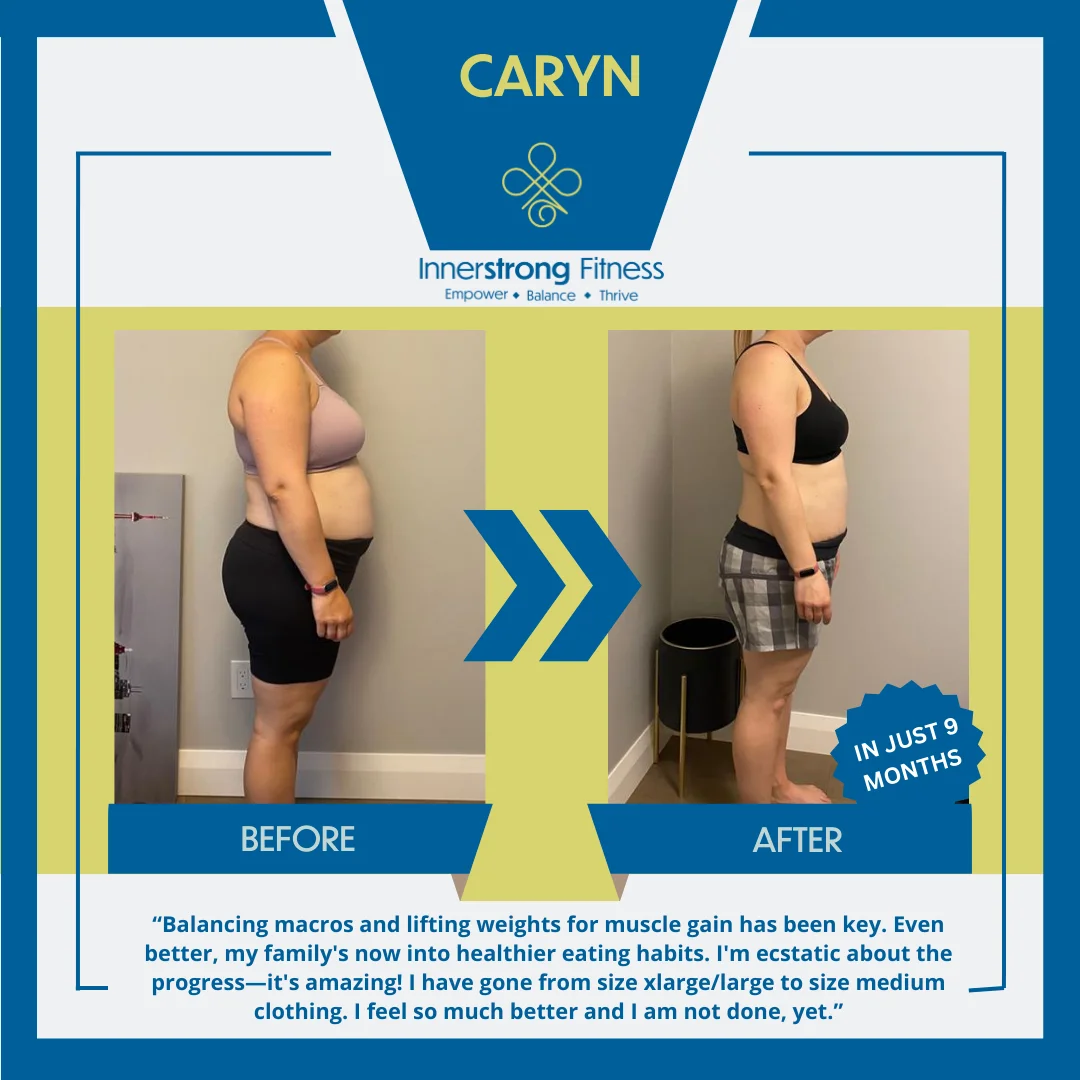
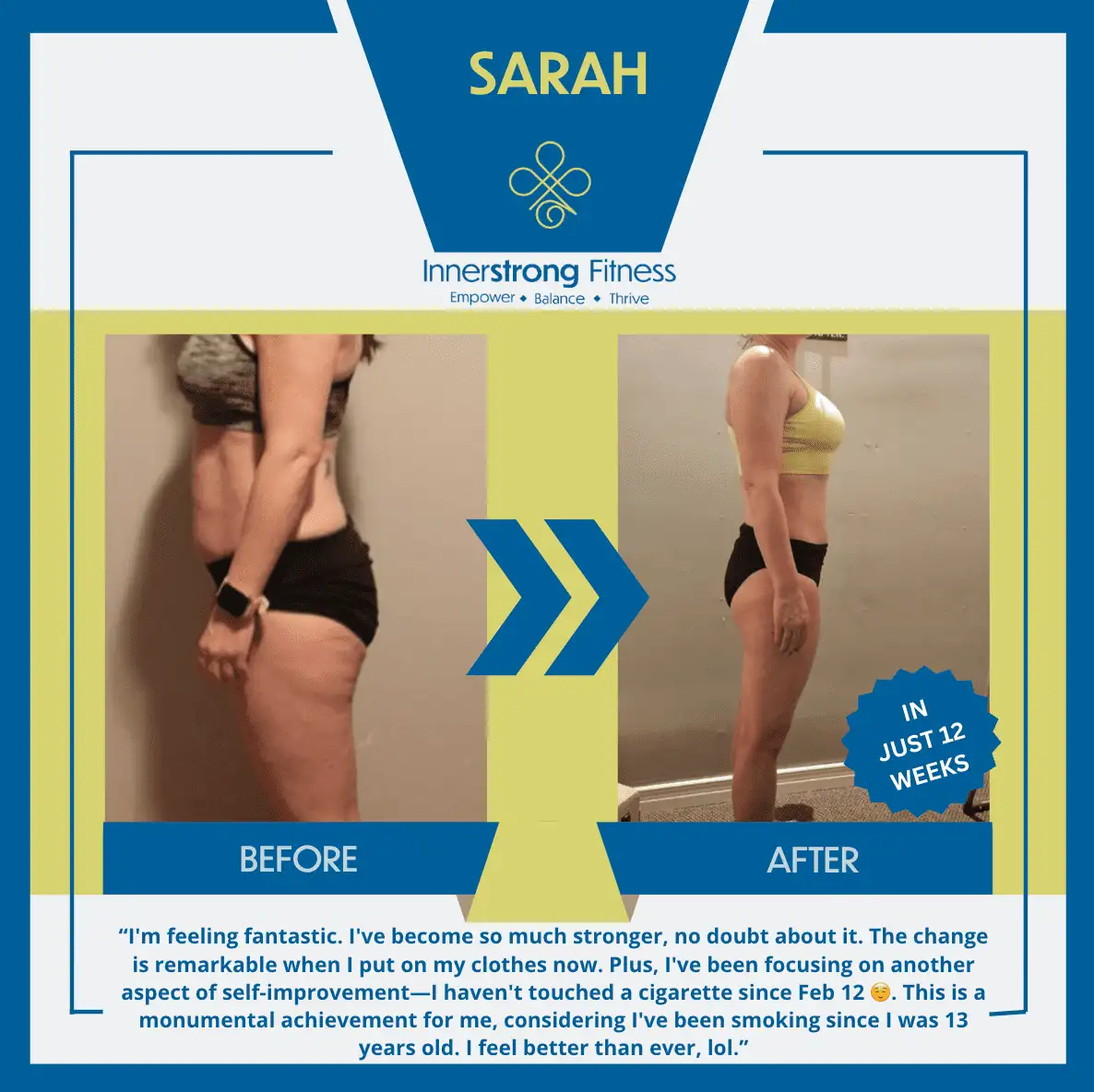
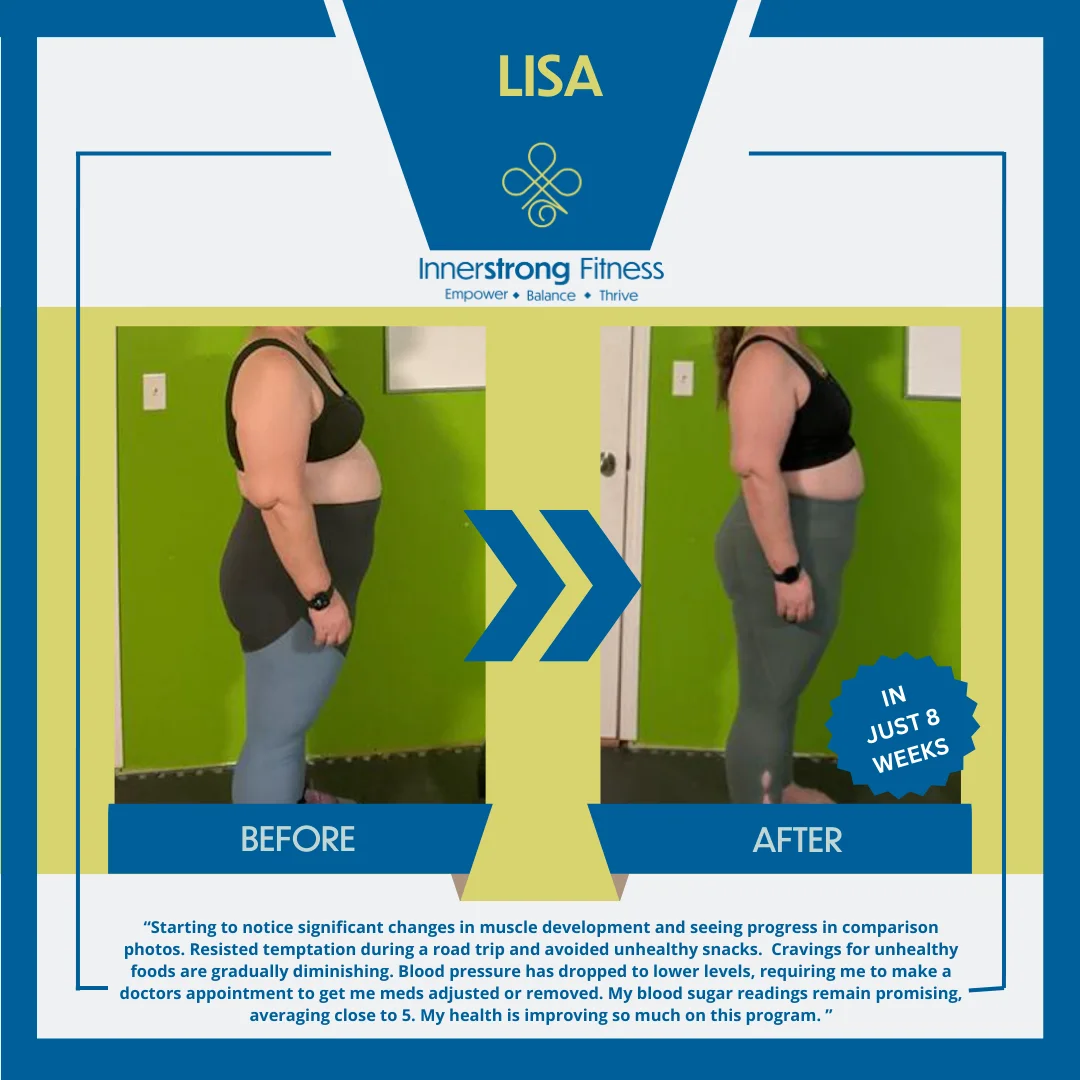
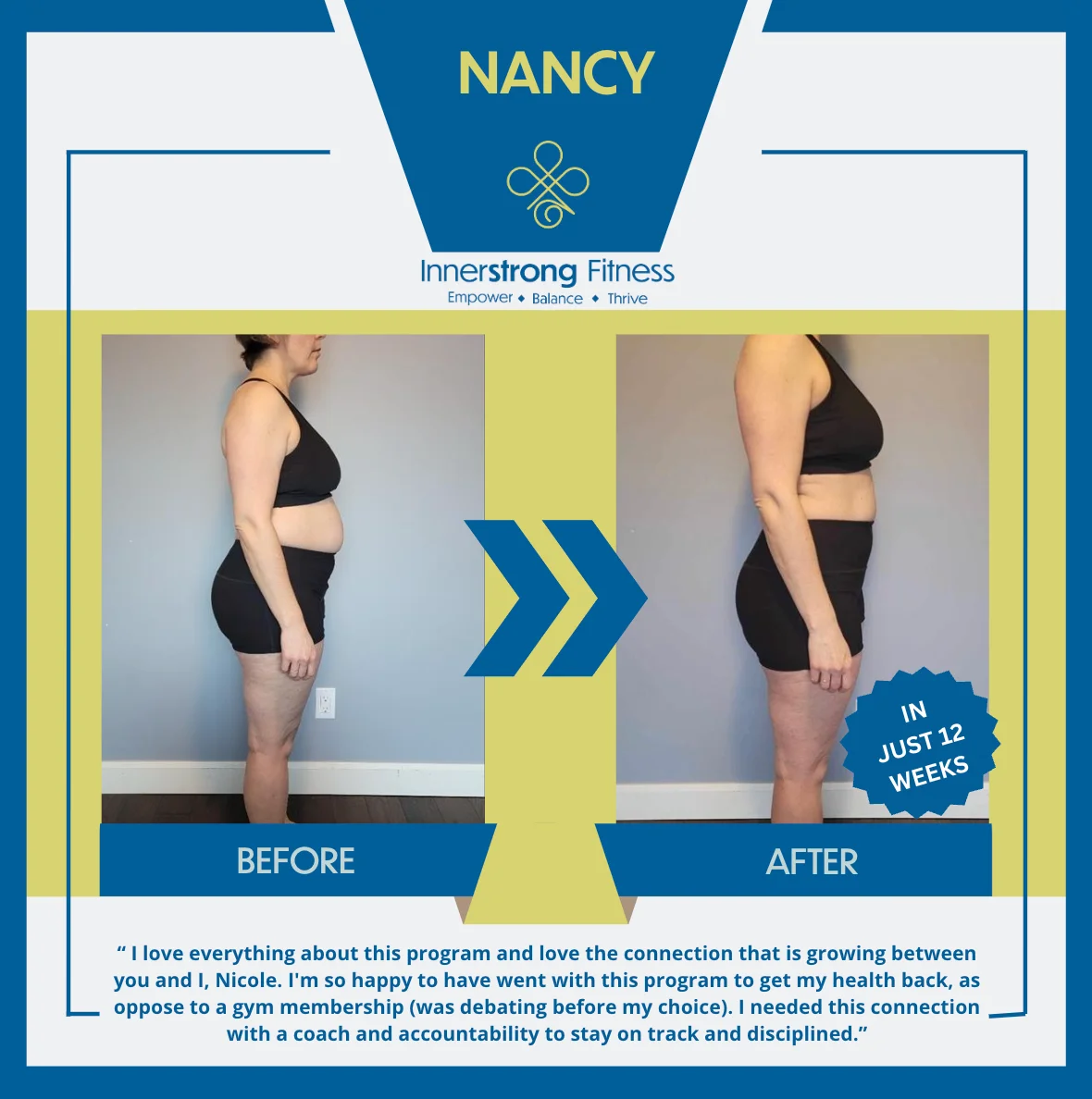
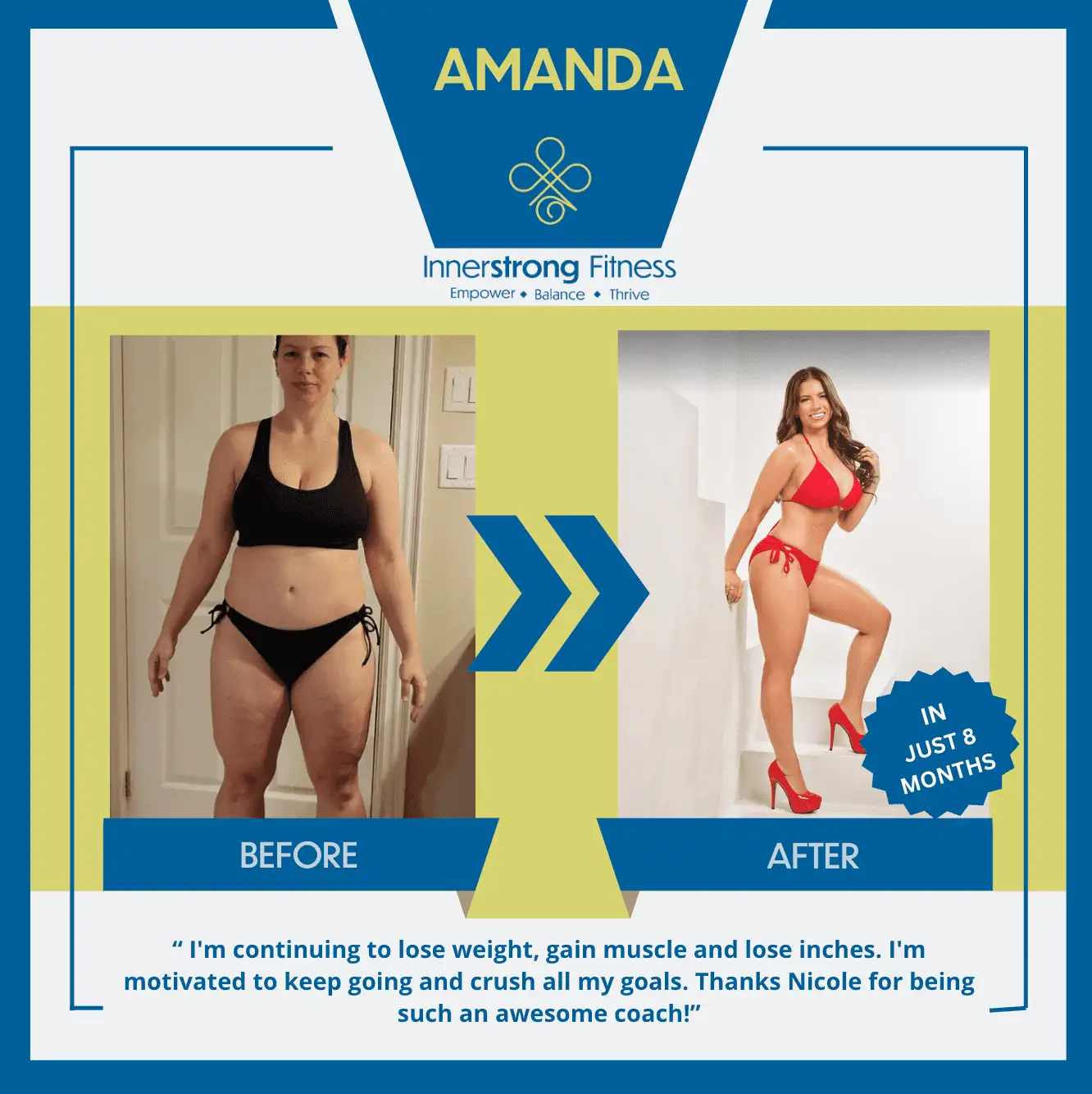
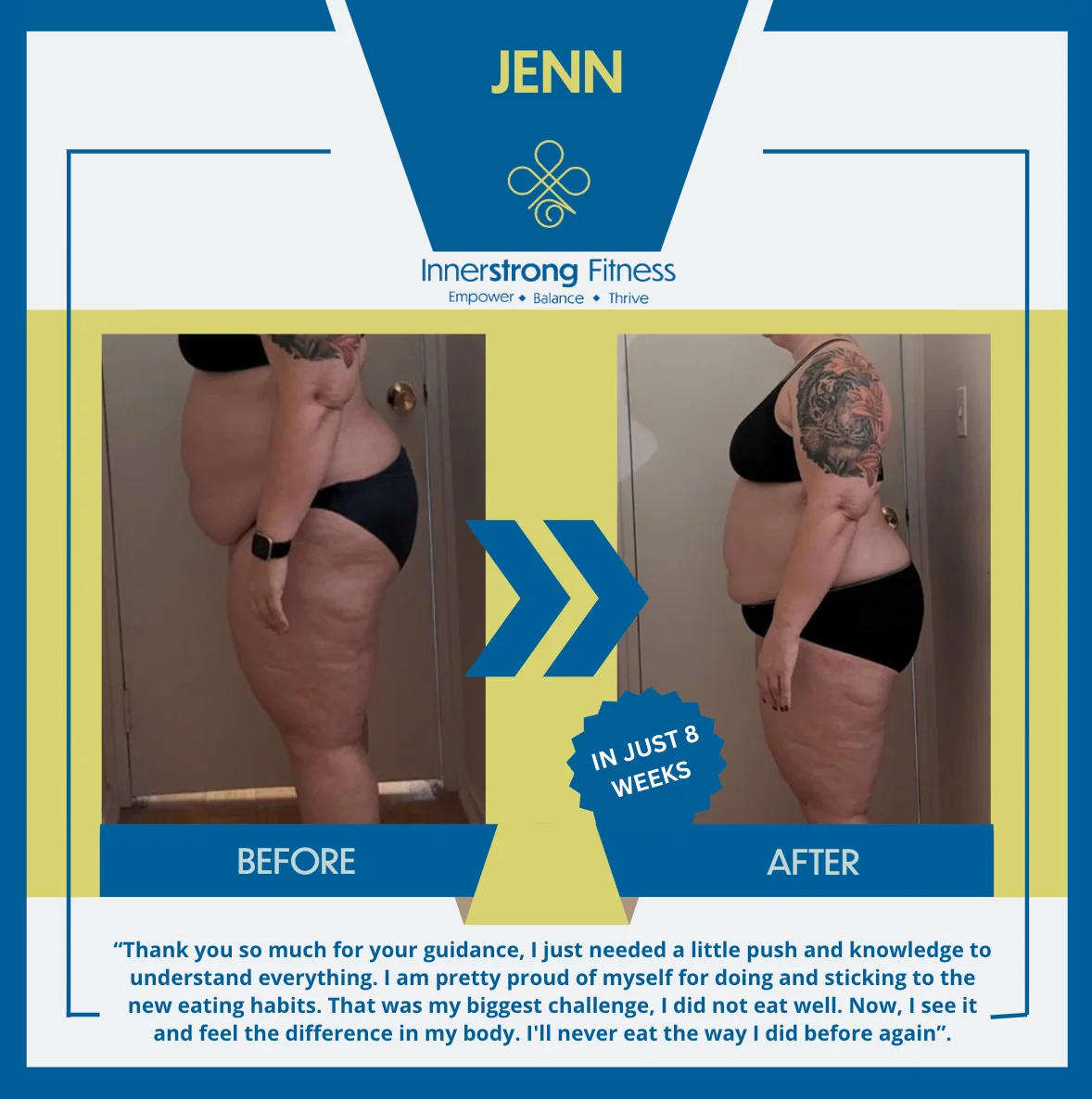
Personalized Support for Menopause and Weight Loss

Menopause can change the way your body responds to food, stress, and exercise. Many women notice that the strategies that worked in their 20s or 30s no longer give the same results. A structured plan from a menopause weight loss coach can help you understand what your body needs now.
Your nutrition plan is tailored to factors such as:
- current eating habits
- energy levels
- body composition goals
- activity level
- sleep patterns
- stress levels
- medical history
- lifestyle and schedule
This allows Innerstrong Fitness to create a plan that supports real progress without making your day-to-day life harder.
How A Menopause Nutrition Coach Can Help
A personalized plan can support more than the number on the scale. Many women seek help to feel stronger, more comfortable, and more in control of their health.
Nutrition coaching may help support:

Weight Management During Menopause
Improved Energy Throughout The Day
Better Blood Sugar Balance
Reduced Reliance On Restrictive Dieting
Muscle Retention And Recovery
More Consistent Eating Habits
Better Confidence Around Food Choices
BONUS! Free Facebook Community – Fearless Journey Collective
A private group for support, tips, and community with like-minded women.
- Shared workout wins & meal ideas
- Motivation & encouragement
- Real friendships and accountability
A Practical Approach You Can Maintain
The goal is to create habits you can actually keep. Rather than handing you a one-size-fits-all diet, Innerstrong Fitness builds a strategy around your preferences, schedule, and challenges. Your plan may include meal guidance, protein targets, portion strategies, education around hunger and cravings, and ongoing adjustments based on progress.
This approach is especially important for women looking for help with nutrition and menopause weight loss goals in a way that feels manageable and realistic.
Ongoing Guidance That Adapts With You
Your body and needs can shift throughout perimenopause and menopause. That is why ongoing support matters. Innerstrong Fitness provides guidance, accountability, and plan updates as your goals evolve. Whether you want to lose weight, improve your relationship with food, or feel stronger in your body, your plan is adjusted to keep it relevant and effective.
Work with Innerstrong Fitness
What Our Clients Frequently Ask
Is it really possible to lose belly fat during menopause?
Yes. Changes in body composition are common during perimenopause and menopause, and many women notice more fat accumulating around their midsection. Hormonal changes, aging, changes in muscle mass, activity levels, sleep, stress, and other factors can all contribute. The good news is that when these underlying factors are addressed, many women successfully lose stubborn belly fat without extreme dieting or excessive exercise.
Is it too late to lose weight after 50?
No. It’s never too late to work toward healthier body composition, greater strength, better fitness, and sustainable nutrition habits. Your goals and results will depend on your individual circumstances, but age doesn’t mean you have to give up on improving your health or fitness.
Why am I gaining weight around my middle?
Changes in body-fat distribution are common during the menopause transition. As estrogen levels change and we get older, women may notice a greater tendency to store fat around the abdomen and changes in overall body composition. Changes in muscle mass, physical activity, sleep, nutrition, and other lifestyle factors can also contribute.
Although you can’t choose where your body loses fat first, a combination of appropriate nutrition, strength training, regular physical activity, and sustainable habits can help support healthier body composition.
Why am I doing everything right but the scale won't move?
The scale doesn’t always reflect everything that’s happening in your body. Changes in muscle mass, water retention, activity levels, menstrual or menopausal changes, sleep, stress, nutrition, and other factors can affect your weight from week to week.
If your weight isn’t changing despite consistent effort, it may be worth looking beyond the number on the scale and reviewing your overall nutrition, activity, recovery, and goals. Sometimes the strategy needs adjusting—not simply more restriction.
Why am I gaining weight even though I'm eating less?
Eating too little for too long can slow metabolism, increase stress hormones, reduce muscle mass, and make fat loss more difficult. Sometimes eating more strategically produces better results.
Can I improve my metabolism?
Yes. Building muscle, balancing blood sugar, improving sleep, managing stress, and eating adequate protein are some of the most effective ways to support metabolic health.
Why am I constantly craving sugar and carbs?
Cravings can have many causes, and they’re not necessarily a sign that something is wrong. Hunger, meal composition, inadequate protein or fibre, sleep, stress, habits, and simply being around highly palatable foods can all influence cravings.
Rather than trying to eliminate cravings, we look at your overall eating pattern and help you build meals that are satisfying and sustainable.
Why am I always hungry?
Persistent hunger can have many causes. Your meals may not be providing enough protein, fibre, or overall volume, but appetite can also be influenced by sleep, stress, activity levels, eating patterns, medications, and other individual factors.
We look at your overall eating pattern rather than simply telling you to eat less. Building balanced, satisfying meals can make it easier to manage hunger while working toward your goals.
Do I have to count calories forever?
No. Calorie tracking can be a useful tool for some people, but it doesn’t have to be a permanent part of your life. Our goal is to help you understand portions, protein, fibre, meal composition, hunger and fullness cues, and other practical nutrition principles so you can make confident choices without feeling dependent on a tracking app.
Do I have to give up all my favourite foods?
Not at all. Sustainable nutrition isn’t about eliminating every food you enjoy. We help you build an approach that supports your goals while leaving room for favourite foods, restaurants, celebrations, vacations, and social occasions. The goal is to create habits you can maintain—not follow a perfect diet for a few weeks.
What makes your program different from other weight-loss programs?
We don’t focus on quick fixes, detoxes, extreme calorie restriction, or one-size-fits-all meal plans. Instead, our approach combines personalized nutrition coaching with fitness, lifestyle habits, education, and accountability. We consider your goals, preferences, activity level, lifestyle, and the changes you’re experiencing during perimenopause or menopause to create an approach that is practical and sustainable.