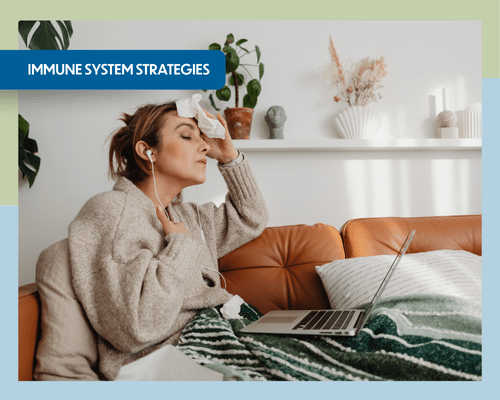
The holidays are a time of celebration, connection, and, unfortunately, peak cold and flu season. This convergence creates a “perfect storm” for compromised immunity. But for women navigating perimenopause and menopause, this challenge is layered with an invisible opponent: hormonal fluctuation.
You may be noticing that you catch every bug that goes around, or that recovery takes longer than it used to. It’s not just the stress of holiday shopping; it’s also your brilliant body responding to significant biological changes. At InnerStrong Fitness, we don’t believe in fighting biology, we believe in understanding it and giving it the strategic support it needs to thrive.
This December, as you juggle festive demands and the lingering threat of seasonal illness, your immune system needs a sophisticated, targeted defense plan. This is not the time for generic health advice; it’s time for an Immune System Fortification Protocol built specifically for the needs of women over 40.
The Unspoken Link: Hormones and Immunity
You know that declining estrogen and progesterone levels are responsible for the well-known symptoms of menopause, such as hot flashes, night sweats, and mood changes. But did you know this hormonal shift directly impacts your body’s frontline defense?
The Hormone-Immunity Connection:
- Reduced Immune Cell Production: Estrogen plays a role in the production and regulation of crucial immune cells, including certain T-cells and B-cells. As estrogen declines, the production line slows, making your system less efficient at identifying and neutralizing pathogens.
- Increased Inflammation: Hormonal shifts are often accompanied by a rise in chronic, low-grade inflammation. This is problematic because your immune system has to divide its resources: it’s constantly battling internal inflammation (the “behind-the-scenes” fire) while simultaneously needing to fight external threats like viruses and bacteria. A system constantly on “low alert” for inflammation has a harder time mobilizing a rapid, decisive response to a true infection.
- Gut Health Changes: Hormonal fluctuations can impact the delicate balance of your gut microbiome, which, astonishingly, houses 70% of your immune system. A compromised gut lining or an imbalance of good-to-bad bacteria directly weakens your entire immune defense network.
Understanding this connection is the first step toward reclaiming your health and ensuring that cold and flu season doesn’t sideline your celebrations. Your body is navigating one of the most significant transitions of your life, and it deserves extra care.
Building Your Core Immune Defense: Essential Nutrients
While a balanced diet is always the foundation, specific vitamins and minerals become non-negotiable for women over 40, especially when seasonal and hormonal stresses converge. Think of these as the construction crew for your immune fortress, they build the walls, manage the communications, and equip the guards.
Vitamin D: The Sunshine Regulator
- Why it Matters Now: Often called the “sunshine vitamin,” Vitamin D is, technically, a hormone. It plays a pivotal role in regulating the expression of over 200 genes, including those that control immune function. It doesn’t just fight; it regulates. Low levels are directly linked to an increased risk of respiratory infections. Given that synthesis from sunlight is minimal in winter months, and absorption decreases with age, supplementation is often essential.
- Actionable Tip: Aim for levels between 3000-5000 international units.
Zinc: The Mineral Powerhouse
- Why it Matters Now: Zinc is required for the development and communication of nearly all immune cells, including Natural Killer (NK) cells and T-cells. It’s also a powerful antioxidant that helps maintain the integrity of your mucous membranes (your first line of defense). Absorption of minerals tends to decline with age and changes in stomach acid production, making zinc supplementation during peak season strategically smart.
- Actionable Tip: Look for bioavailable forms like zinc picolinate or zinc glycinate.
Vitamin C: The Antioxidant Protector
- Why it Matters Now: A classic for a reason, Vitamin C is a potent antioxidant that protects immune cells from damage caused by free radicals generated during an immune response. It also enhances the production and function of white blood cells. While readily available in food, strategic, higher dosing during the initial signs of a cold can be highly effective.
- Actionable Tip: Choose a non-acidic form if you have a sensitive stomach, and pair it with bioflavonoids to enhance absorption.
Selenium: The Thyroid & Immune Ally
- Why it Matters Now: This often-overlooked trace mineral is essential for powerful antioxidant activity and is critical for thyroid hormone metabolism. Thyroid function and immune health are deeply interconnected, and since hormonal changes can impact thyroid efficiency, supporting it with selenium offers a double benefit for immune resilience.
- Actionable Tip: Brazil nuts are the richest source, but consistent supplementation may be needed to ensure daily requirements are met, particularly if you have diagnosed thyroid issues.
Consistency is Your Greatest Defense
Building robust immunity during perimenopause and menopause isn’t a quick fix, it’s a commitment to consistent, evidence-based strategy. Your body is doing the hard work of hormonal transition, and by proactively addressing the immune vulnerabilities that come with it, you are ensuring a vibrant, energetic December, ready for whatever the new year brings.
This is the InnerStrong approach: Empowerment through knowledge, Balance through strategic support, and Thrive through consistent action.
Ready to take the next step in creating a health strategy that truly understands your unique biology?
Ready to Build an InnerStrong Life?
It’s time to stop guessing and start implementing a plan that is built for your stage of life.
- Master Your Health Blueprint: Discover the structured path to metabolic balance and hormonal harmony designed specifically for women over 40. Start your transformation by exploring the InnerStrong Client Journey today: https://innerstrongfitness.com/client-journey/
- Book Your Strategy Call: Ready for personalized guidance to tackle your metabolic and hormonal challenges? Book a qualifying call with me, Nicole, to discuss how we can work together: https://innerstrongfitness.academy/qualifying-survey-page