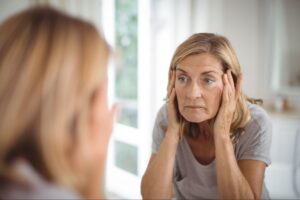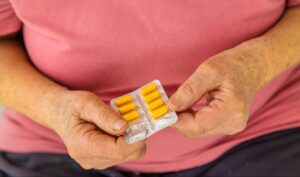
You recovered from COVID.
At least, technically.
The fever passed.
The cough was resolved.
You went back to work.
But something still feels off.
You’re more fatigued than you’ve ever been.
Your brain feels foggy.
Your workouts leave you wiped out for days.
Your heart races unexpectedly.
And if you’re in your 40s or 50s, there’s another layer:
Your menopause symptoms feel worse than before.
If this sounds familiar, you are not imagining it.
The overlap between Long COVID and perimenopause is real, and midlife women appear to be disproportionately affected.
Let’s break it down the InnerStrong way.
What Is Long COVID?
The World Health Organization defines Long COVID (post-COVID-19 condition) as symptoms that persist or develop three months after the initial infection and last for at least two months, without another explanation.
Common symptoms include:
Persistent fatigue
Brain fog
Shortness of breath
Heart palpitations
Exercise intolerance
Sleep disturbances
Anxiety or mood shifts
The Centers for Disease Control and Prevention reports that women are more likely than men to experience prolonged symptoms.
And for women in midlife, the experience often feels amplified.
Why Midlife Women May Be More Vulnerable
Estrogen is not just a reproductive hormone. It is an immune-modulating hormone.
It influences:
Inflammatory response
Vascular function
Mitochondrial energy production
Brain metabolism
Autonomic nervous system balance
During perimenopause, estrogen fluctuates dramatically. Eventually, it declines.
When a viral illness like COVID hits during this hormonal recalibration, recovery may be slower and more complex.
Your body is already adapting to a new hormonal environment.
Now it must recover from systemic inflammation too.
The Inflammation Layer
COVID-19 triggers a powerful inflammatory response.
Even after the acute infection resolves, low-grade inflammation can persist.
Chronic inflammation impacts:
Insulin sensitivity
Gut barrier integrity
Brain clarity
Hormonal signaling
Visceral fat, which tends to increase after menopause, also produces inflammatory cytokines.
This creates a compounding effect.
Inflammation plus hormonal shifts equals metabolic stress.
Mitochondria: The Energy Crisis Inside the Cell
Many Long COVID symptoms point to mitochondrial dysfunction.
Mitochondria are the “power plants” of your cells.
They produce ATP, the energy currency your body runs on.
Estrogen supports mitochondrial efficiency.
When estrogen declines and inflammation rises:
ATP production drops
Fatigue increases
Muscle endurance declines
Brain processing slows
This is why so many women say:
“I feel like my battery never fully recharges.”
Supporting cellular energy becomes critical.
Creatine, often misunderstood, plays a role in ATP regeneration, especially in muscle and brain tissue.
The Nervous System Piece: Dysautonomia & Stress Sensitivity
Long COVID is frequently associated with autonomic nervous system dysfunction, sometimes referred to as dysautonomia.
Symptoms may include:
Heart palpitations
Dizziness upon standing
Temperature dysregulation
Anxiety spikes
Exercise intolerance
During menopause, the autonomic nervous system is already recalibrating due to declining estrogen and progesterone.
Add viral stress, and the system can become hyper-reactive.
Cortisol may remain elevated.
Sleep becomes fragmented.
Recovery slows.
The nervous system cannot heal if it never exits fight-or-flight mode.
Brain Fog: Hormones or Long COVID?
Brain fog is one of the most reported Long COVID symptoms.
But here’s the nuance:
Menopause itself can cause cognitive shifts.
Estrogen receptors are abundant in the brain, especially in areas responsible for:
Memory
Language
Executive function
When estrogen declines, brain glucose metabolism shifts.
When COVID-related inflammation affects the brain, clarity declines further.
For many women, it’s not one or the other.
It’s both.
The Gut-Immune-Hormone Axis
COVID impacts the gut microbiome.
The gut microbiome regulates:
Estrogen metabolism (estrobolome)
Immune response
Inflammation
Neurotransmitter production
When gut balance shifts:
Estrogen clearance may change
Inflammation persists
Fatigue worsens
Healing the gut is often foundational to recovery.
Why Exercise Feels Harder After COVID
Many women attempt to “push through” post-COVID fatigue.
But exercise intolerance is common in Long COVID.
Overtraining too early may:
Spike cortisol
Increase inflammation
Delay recovery
Worsen autonomic instability
Instead of high-intensity workouts, recovery often requires:
Zone 2 aerobic training
Gentle strength work
Gradual progression
Adequate protein intake
Rest days without guilt
Muscle preservation still matters but intensity must match recovery capacity.
Hormone Therapy & Recovery
Some emerging research suggests estrogen may have protective immune effects.
The National Institutes of Health has explored sex-based differences in immune response to COVID.
While hormone therapy is not a Long COVID treatment, some women report improved symptom stability when menopausal symptoms are better controlled.
Always discuss with a qualified provider.
What Recovery Actually Requires
Long COVID recovery in midlife is not about pushing harder.
It’s about recalibrating.
Here is the InnerStrong framework:
Stabilize Blood Sugar
Balanced meals with protein and fiber reduce inflammatory spikes.
Support Mitochondria
Adequate protein, creatine (if appropriate), iron optimization.
Repair Sleep
Protect deep sleep, it is where immune repair occurs.
Regulate the Nervous System
Daily walking, breathwork, parasympathetic activation.
Gradual Strength Rebuilding
Muscle preservation without overtraining.
Gut Support
Whole foods, fiber diversity, microbiome repair.
Recovery is layered, not linear.
The Innerstrong Takeaway
If your body feels different after COVID, especially during perimenopause or menopause, you are not imagining it.
You are navigating:
Hormonal recalibration
Immune system recovery
Mitochondrial stress
Nervous system dysregulation
Metabolic shifts
This is complex physiology.
Not weakness.
Not laziness.
Not failure.
With the right strategy, your body can rebuild resilience.
But it requires precision, not punishment.
Ready to Rebuild Your Energy?
If you feel like you haven’t “bounced back”.
If workouts leave you drained.
If menopause symptoms intensified after COVID.
You don’t need more grit.
You need a recovery blueprint built for midlife physiology.