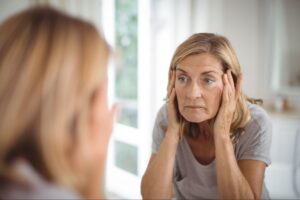
“Eighteen months ago, I gathered the courage to go to my GP with menopause symptoms. I walked out five minutes later with antidepressants. I have struggled every day (and night) since, feeling like I’m going mad.”
Unfortunately, this is not a rare story.
It is one we hear every single week from women who feel dismissed, misunderstood, or minimized when they finally seek help for menopause-related symptoms.
If this has happened to you, let’s be very clear from the start:
You are not imagining your symptoms
You are not failing
Your experience deserves better
Why So Many Women Feel Let Down by the Healthcare System
The uncomfortable truth is that menopause care has been historically under-researched, under-taught, and under-prioritized.
Here are facts many women are shocked to learn:
Meaningful research into menopause only began around 50 years ago
Female bodies were excluded from most clinical research until 1993
Much of modern medicine is still based on male physiology
Only around 20% of OB-GYNs receive formal menopause training, often averaging just six hours
Menopause is not a mandatory module in GP training
A study published in 2022 found that 78% of GPs in the UK and Europe do not recall receiving menopause education during medical school
This is not about blame. It is about context.
When providers are not trained, women pay the price.
Women’s Health Deserves Better Than This
Research shows that the average woman will:
Attend up to 10 GP appointments before receiving a menopause diagnosis
Experience approximately 7 dismissals along the way
This is happening even though every woman will go through menopause if she lives long enough.
Being dismissed does not just feel frustrating. It delays treatment, increases suffering, and leaves women doubting themselves.
The Two Most Common Reasons Women Are Dismissed
1. “You’re Too Young.”
There is no single “normal” age for menopause.
Average menopause age is 45 to 51
Perimenopause often begins 5 to 10 years earlier
Many women experience symptoms in their late 30s to early 40s
Hormones change gradually, and symptoms often begin long before periods stop.
If you are experiencing symptoms, you do not need to wait for menopause to be “official” to seek support.
2. “Your Blood Work Looks Normal.”
This is one of the most misunderstood misconceptions.
There is no definitive blood test for perimenopause.
According to NICE guidelines:
Perimenopause and menopause should be diagnosed based on symptoms alone, without confirmatory laboratory tests.
Hormones fluctuate daily, sometimes hourly.
A “normal” lab value does not invalidate your lived experience.
Why Menopause Health Is Bigger Than Hot Flushes
Loss of estrogen impacts nearly every major system in the body.
Post-menopause risks increase for:
Bone density loss
Digestive and gut health changes
Metabolic slowdown
Blood pressure shifts
Visceral fat gain
Cardiovascular disease
Cognitive changes
Pelvic and bladder health issues
Menopause health is lifelong and deeply individual.
What to Do If You’re Being Dismissed
1. Track Your Symptoms Clearly
Write down symptoms, timing, and frequency before appointments.
2. Know Your Family History
Share history of heart disease, osteoporosis, cancers, or thyroid issues.
3. Clarify Your Preferences
Know whether you want HRT, lifestyle support, or both.
4. Know Your Normal
Lab ranges do not override lived experience.
5. Keep a Symptom Journal Between Visits
Track sleep, mood, energy, weight, digestion, pain, and brain fog using notebooks or apps.
Important Note on HRT
If you are new to HRT:
Dosages often need adjusting
Hormones still fluctuate
Follow-up is important
Best practice includes review every 1–3 months with symptom-based adjustments.
The Role of Nutrition and Lifestyle
Effective menopause management often includes:
Nutrition adjustments
Stress regulation
Strength training
Sleep optimization
Metabolic support
These support medical care rather than replace it.
If You’re Still Being Dismissed: A Letter You Can Use
Subject: Request for Assessment of Menopause Related Symptoms
Dear Dr. [Last Name],
I hope this message finds you well. I am writing to request an appointment to discuss ongoing symptoms that I believe may be related to perimenopause or menopause.
Over the past [timeframe], I have been experiencing the following symptoms:
[list symptoms].
These symptoms are having a significant impact on my daily functioning, quality of life, and overall wellbeing.
In preparation for this visit, I have reviewed Canadian clinical guidance related to menopause care. Guidance from the Society of Obstetricians and Gynaecologists of Canada (SOGC) recognizes that menopausal symptoms can have a profound effect on quality of life and emphasizes the importance of individualized, patient-centred care. Canadian menopause guidance also notes that menopausal hormone therapy (MHT) is considered the most effective treatment for vasomotor symptoms in women without contraindications, particularly those under 60 years of age or within 10 years of menopause. Current Canadian tools and recommendations support a symptom-informed clinical approach, with treatment decisions made collaboratively based on a patient’s experiences, health history, and preferences.
With this in mind, I respectfully request:
A comprehensive, symptom-based evaluation
A discussion of evidence-based treatment options, including menopausal hormone therapy (MHT/HRT) if clinically appropriate, as well as non-hormonal alternatives
Any additional investigations you feel are necessary to rule out other contributing conditions
For clarity, I have attached a brief symptom record to support our discussion.
I value your expertise and would appreciate the opportunity to work collaboratively to develop a plan that supports my health, function, and long-term wellbeing.
Thank you for your time and care.
Sincerely,
[Your Full Name]
[Date of Birth, if preferred]
[Contact Information]
Final Thought from Innerstrong Fitness
Menopause is not something to “push through.”
It deserves support, strategy, and respect.
You are allowed to advocate for yourself and feel better.
If you would like guidance from a registered menopause specialist, you can book a free menopause health consultation.
You do not have to navigate this alone.